
 Search


 www.google.com
Set it and Forget it with Automated Fund Transfers (AFTs)
When people build routines and habits to support goals, many turn to podcasts or books for advice on how to stay consistent. James Clear, author of the popular book Atomic Habits, explains that one of the key elements to creating a better habit is by making that habit as easy as possible.
“Whenever you want to change your behaviour, you can simply ask yourself: How can I make it obvious? How can I make it attractive? How can I make it easy? How can I make it satisfying?" James Clear, Atomic Habits.
If you have financial goals to grow your savings, start investing or build an emergency fund, setting up an Automated Funds Transfer (AFT) is an easy way to stay consistent and take the worry out of remembering. You can set it and forget it.
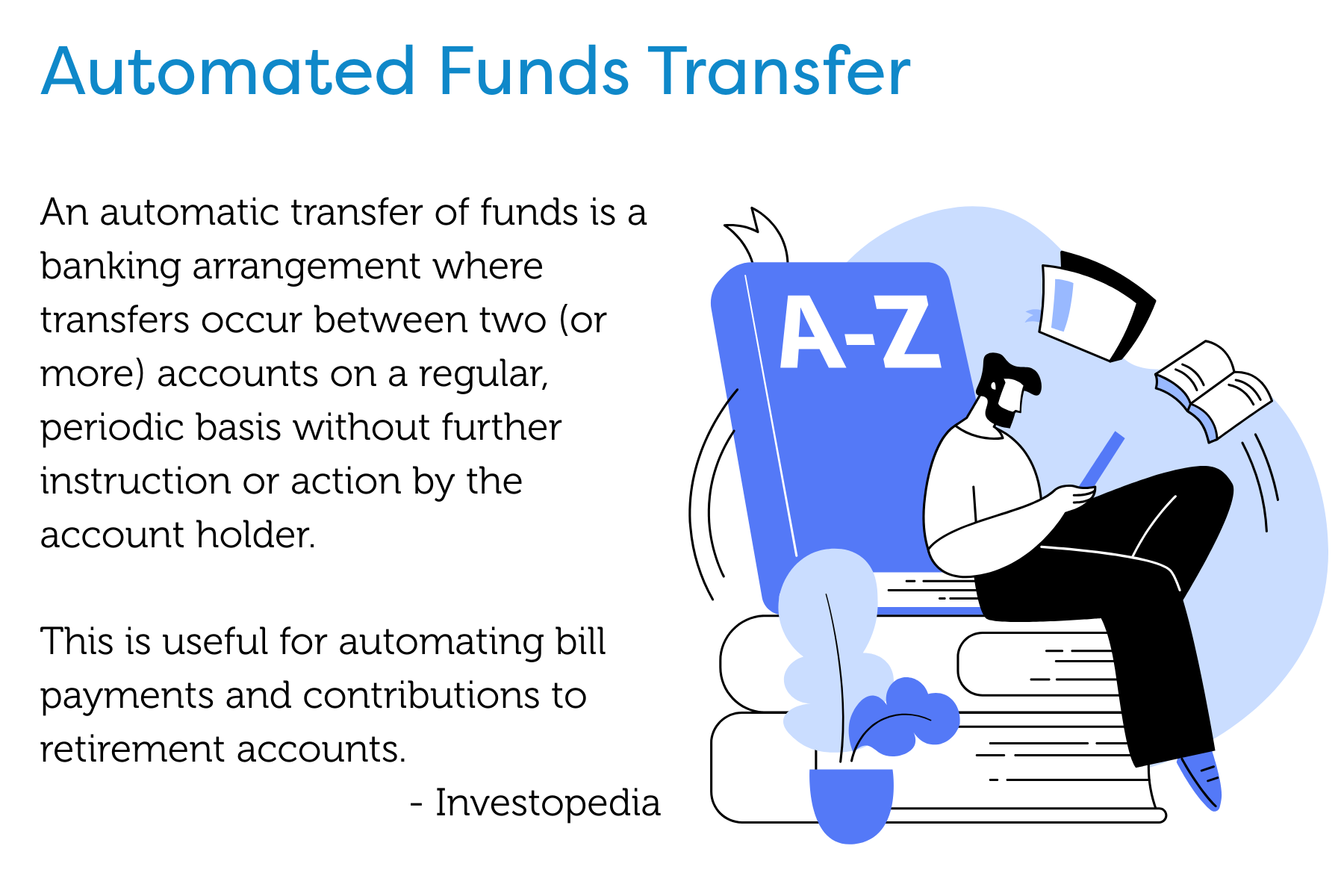
What is an Automated Funds Transfer?
An AFT is a transfer of funds between two or more accounts that is set up on a recurring basis and there is no further action required by the account holder.
Make the habit easy
“Goals are good for setting a direction, but systems are best for making progress." James Clear, Atomic Habits.
A great way to successfully maintain a new habit is setting up a system and automating it as much as you can. You might be familiar with the concept of automated payments if you have scheduled any recurring bill payments each month such as a cellphone, insurance or equalized utility bill.
You can also automate your savings by scheduling money to be moved from your chequing account into a savings account on a regular basis. Many people like to do this on, or right after, their regular pay day.
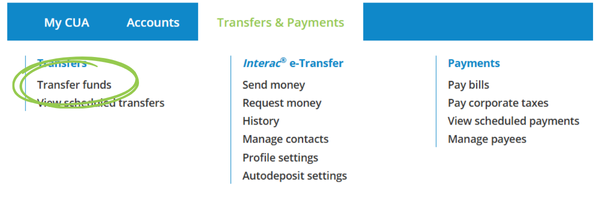
Setting up an AFT for some types of savings accounts can be done directly through CUA’s Digital Banking System. To do this, select the “Transfers & Payments” tab within online banking, and then select the “Transfer Funds” section.
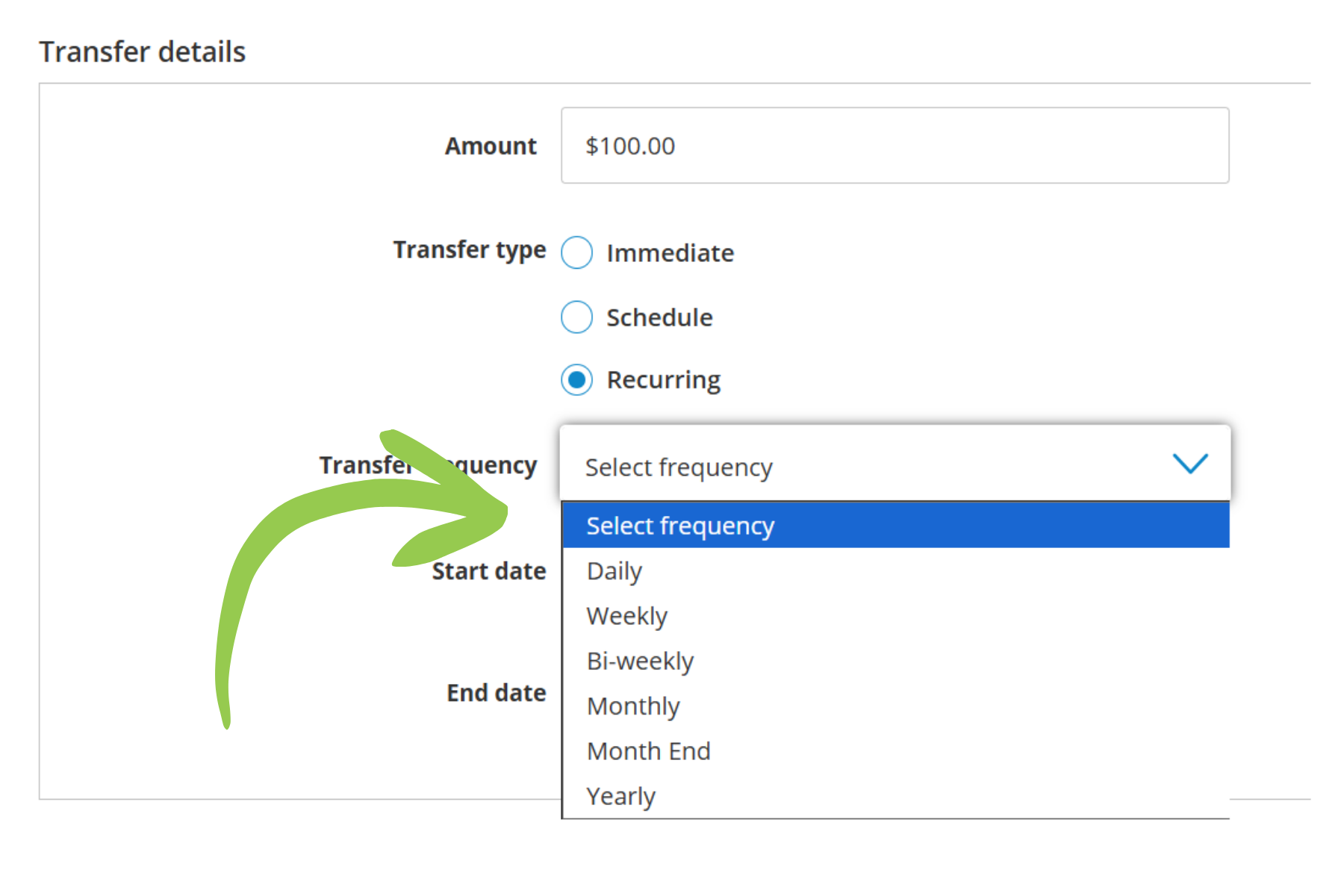
From there you can choose the amount and frequency for the payment to be made.
If you think that automating your savings will help you reach your financial goals, there are a few different types of savings accounts to consider.
1. Standard Savings Account: This is a secure account that is often opened alongside a standard chequing account. It is a great account if you want to easily access the funds but generally has a low interest rate. These types of accounts work well for setting aside money for upcoming bill payments or storing funds you don’t want to access via your debit card. You can set up an AFT to your savings account directly CUA’s Digital Banking System or Mobile App.
2. High-Interest Savings Account: A High-Interest Savings Account (or HISA) pays a higher interest rate than a standard savings account. These types of accounts are easy to access and are great for short-term financial goals or for storing emergency funds. You can automate the payments to your HISA directly through CUA’s Digital Banking System or Mobile App.
3. Tax-Free Savings Account (TFSA): This is a registered savings account available to all Canadians over 18. A TFSA can be in the form of a stock, ETF, mutual funds and more. These are great for medium to long-term financial goals. To get a TFSA set up, visit your branch or reach out to your Financial Advisor.
4. Registered Retirement Savings Plan (RRSP): This is also a registered savings account with tax benefits. Contributions made to an RRSP reduce your taxable income for that calendar year. Like a TFSA, this account can include stocks, ETFs, mutual funds and other investment options. This allows you to adjust the risk from growth-focused in your early years, to a more balanced or risk-averse portfolio as retirement approaches. This type of account is best for long-term financial goals. To set up an RRSP, visit your branch or reach out to your Financial Advisor.
Considerations
When deciding the type of account to open to support your financial goals, it is important to understand the differences between these account types. It is very normal to have a combination of two or more of these account types to focus on both long- and short-term goals. We have made a list of account considerations to review with your Financial Advisor before opening a new account:
• Fees: Are there fees for opening the account, maintaining the account or withdrawing money out of the account?
• Accessibility: How quickly can you get access to the money in this account? Can you access it from your online banking platform, or do you need to visit a branch in person?
• Time: Do you need to wait several days before you see the money in your account? Make sure you understand any time constraints.
• Are your financial goals long or short-term? Often people want to contribute small amounts to both long- and short-term savings goals. It may be in your best interest to consider opening separate accounts to better support these different financial goals.
If you aren’t sure which account might be the best for your savings goals, speak with one of our Financial Advisors and they can discuss what options work best for your specific needs.
Explore some of our other CUAdvice articles about budgeting and saving:
• Exploring Low-Risk Investment Options