
 Search


 www.google.com
How The Station Food Hub Company is Changing Local Food Solutions with "Imperfect" Produce
Rebecca Tran’s background as a dietitian combined with her experience working in the school system identified a clear gap between farmers, other suppliers and public institutions eager to buy local products but constrained by guidelines.
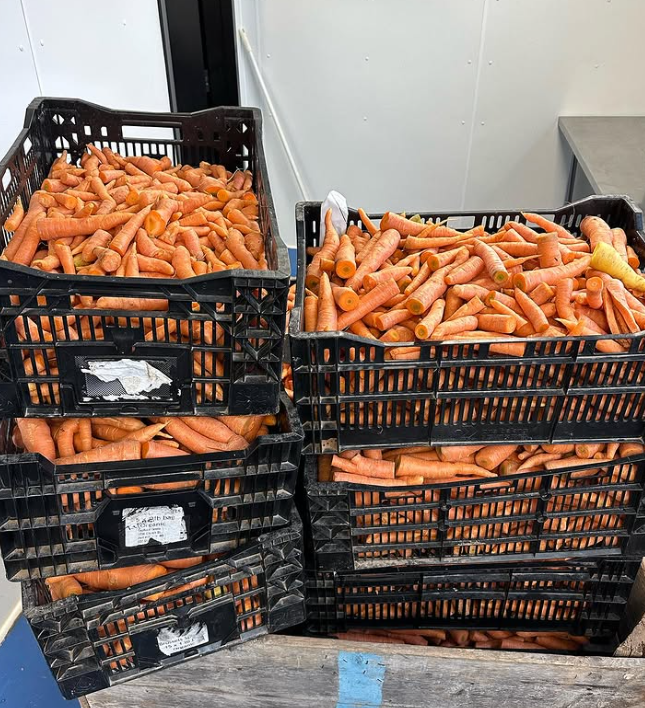
“I recognized that suppliers and farmers have food that doesn’t always meet the grocery standards and organizations are eager to buy locally but must follow strict quality guidelines,” explains Rebecca. “I wanted to be the missing link. Someone who could ensure these standards were were met so this food could still be used.”
This idea led to the creation of The Station Food Hub Company, a community food hub that connects local farmers with many food programs and grocery stores across the Province. Based in Newport Station, The Station Food Hub Company works with suppliers to upcycle produce that can’t be sold on grocery shelves.
They source and purchase what's known as "seconds produce", sometimes called misshapen or “perfectly imperfect” produce that would otherwise go to waste. These are processed into usable, high-quality food items.
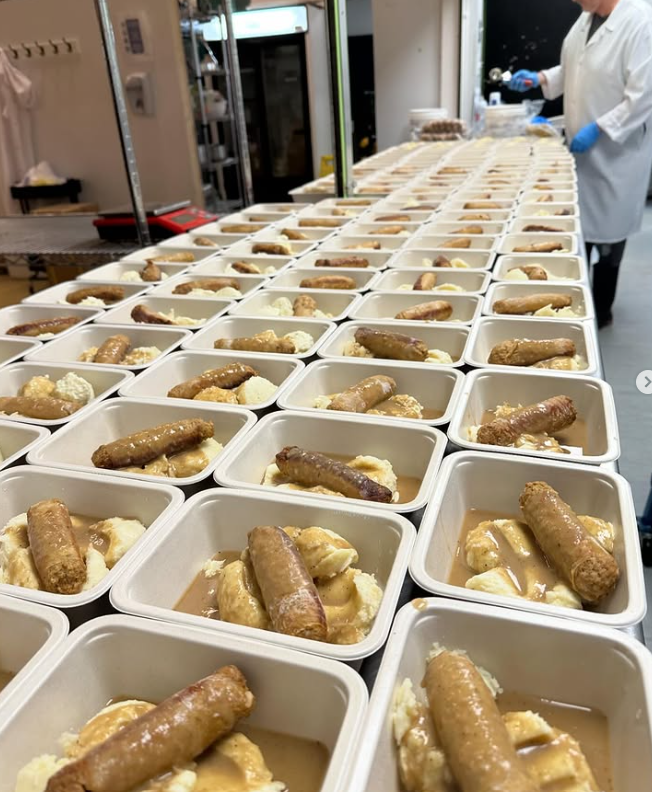
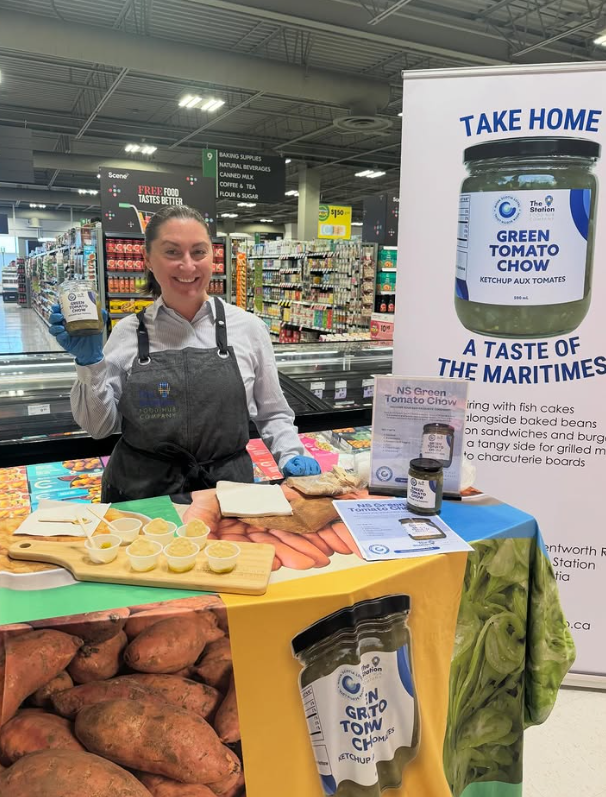
“Right now, we are working with Gordan Food Services to provide mashed potatoes for the Provincial Department of Health for a few hospitals, we prepare the apple slices for school programs and green tomato chow that’s sold at Superstore and Sobeys,” shares Rebecca.
In 2019, they purchased and revitalized a 17,000 square-foot unused school in Newport Station, transforming it into their processing facility. Sustainability was a priority throughout the renovation, including replacing an outdated boiler system with an upgraded HVAC and installing a rooftop rainwater-catchment system with UV filtration.
“Our whole building is run off of rainwater,” said Rebecca. “This water is used for all of our fruit processing. Dry months can sometimes be challenging, but when rain is available our systems can be fully supported with the rainwater collected.”
The Station Food Company applied to CUA’s 2026 Community Investment Grant Program and was selected as a grant recipient. Rebecca plans to use the grant funds to purchase freeze-drying equipment.
“With the support of CUA, we are now able to purchase a freeze dryer, giving us the opportunity to upcycle more food and add processing infrastructure into our Province.”
In their building, The Station was also able to set up a space to promote community engagement called The Learning Farm. The Learning Farm works with local food banks, community members and youth to gain food processing skills they can take forward into the workforce.
“We have a partnership with Edge Employment where we employ youth from their various cohorts to develop skills.”
With groups of five to six students, Rebecca and others working at The Station teach students food processing skills and how to ensure quality standards.
“The Learning Farm is where the youth, volunteers, tours, students and local food bank come,” said Rebecca. “The food can be processed at the Learning Farm and then go out to who needs it.”
When asking Rebecca what the next goal is for Station Food, she says the biggest focus now is to scale.
Looking ahead, growth is the priority. “We have the space—we just need to scale,” Rebecca explains. “Our goal is to have all three processing kitchens operating daily and to distribute our products across Nova Scotia and eventually the Maritimes.”
Her efforts are being recognized, with The Station Food Hub Company named a finalist in Canada’s Food Waste Reduction Challenge for their waste-reduction model and operations.
“We’re proving this can work,” Rebecca shared. “So many people think this is impossible, and that it’s hard to sell local food to public institutions, but it is possible and there are options.”
What began with one or two employees has now grown into a team of 10.
“It’s incredibly rewarding to employ people locally and support their goals,” Rebecca says. “Watching the team grow has been one of the most meaningful parts of this journey.”
Since 2015, CUA’s Community Investment Grant Program has distributed more than $650,000 to businesses, initiatives and programs that are making a positive impact across Nova Scotia. If your work strengthens communities or the provincial economy, visit cua.com/grants to learn more about the Program and how to apply.